Why Muay Thai Gym Condition 1 Combat Center Is Ideal for Cardio and Power
Cardio is more than lungs and grit. Real endurance depends on how efficiently you move, how you produce and absorb force, and whether your technique holds when fatigue creeps in. Muay Thai, when taught with intention, hits all of those levers at once. The right program builds an engine and a hammer at the same time. That is where Condition 1 Combat Center stands out. The coaching group knows how to scale intensity, they track what matters, and they teach athletes to produce power without trading away posture, balance, or joint health.
I have trained fighters and everyday professionals side by side on the same mats. The difference between a good class and a transformative one is rarely a fancy drill. It is the structure behind the session, the coaching eyes on small details, and the culture that keeps people showing up. At Condition 1, the Muay Thai sessions sit inside a broader ecosystem that includes boxing, Brazilian jiu jitsu, MMA fundamentals, and practical self defense. That variety helps condition the whole athlete. It also keeps training fresh so you do not stall on a single track or grind yourself into the ground.
Why Muay Thai produces such reliable cardio and power
Muay Thai demands repeated high output with clean technique. Every round asks you to send force down the chain, from the floor to the target, while holding shape through the core and hips. You kick, knee, elbow, and punch. You clinch, frame, and pummel. Each skill, performed under a timer, taxes the anaerobic and aerobic systems in distinct waves. A two minute pad round with active rest between combinations trains the phosphocreatine system, C1 Combat then immediately bleeds into glycolytic demand. Do that across 6 to 10 rounds, and you have a full energy system session wrapped inside skill work.
Power development in this sport is not detached from endurance. A heavy kick lands only if your base is stable and your breathing is timed. That is why athletes who come in with strong deadlifts but stiff hips often see their numbers on the pads jump after a month of targeted hip rotation and footwork drilling. Conversely, distance runners with great VO2 capacity learn to express that engine as sharp, repeatable strikes without fading late in a round.
What sets Condition 1 Combat Center apart
Plenty of gyms hold timers and play loud music. The difference at Condition 1 Combat Center is the conversation between skill and physiology. Coaches here do not chase exhaustion for its own sake. They design a session to layer movement quality, then speed, then load. The pads are not random. Combos progress with intention. Round structures shift through the week, and recovery protocols are clear.
The facility layout matters too. Heavy bags are fixed and spaced so footwork and angles can develop without traffic. Bags range from roughly 80 to 150 pounds to change the striking feedback. The pad racks and gloves are organized by size with clear hygiene routines, a small detail that becomes critical when people train four to six times per week. The ring is used for partner spacing and live scenarios, not just sparring on Fridays.
I have watched a new member, a 38 year old nurse, learn to kick without over-rotating in one session because a coach cued her lead hip pocket rather than shouting louder. Those are the micro wins that, over months, turn into better cardio because you waste less movement and strain fewer tissues.
Inside a typical Muay Thai session here
Warm up is not a throwaway. Skipping rope for 3 to 5 minutes raises temperature. Then coaches guide dynamic mobility for the hips and thoracic spine, often banded or partner assisted. From there, shadowboxing sets rhythm. You learn to breathe with each strike, sharpen your guard, and exaggerate hip turns like you would under light resistance. By the time pads come out, you have rehearsed the mechanics and switched on the necessary muscle groups.
Pad rounds commonly run 2 or 3 minutes with 45 to 60 seconds rest. Early rounds emphasize clean lines: jab, cross, teep, basic checks. Mid rounds add power and volume, often with a finish that spikes intensity, like 20 seconds of nonstop knees. Final rounds mix defenses and counters. On heavy bag days, assignments are precise. You might do 10 kicks each side on the minute for 10 minutes to build repeatability, then alternate power rounds with footwork and angle rounds. Clinch work usually follows once the basics are in place, because it builds grip and neck strength while teaching posture under pressure.
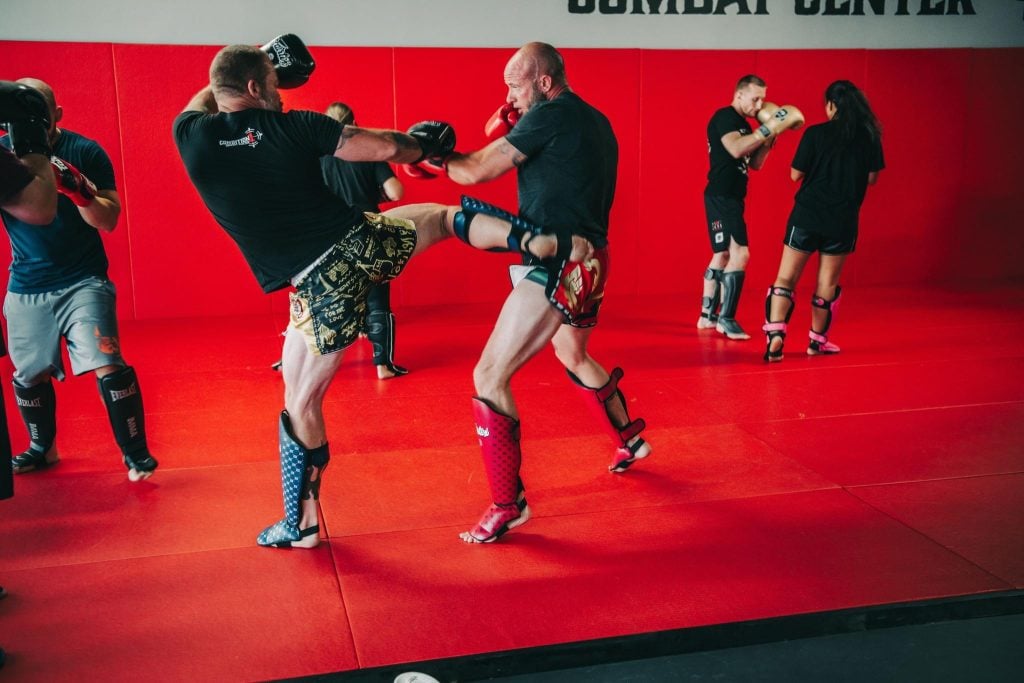
Cool down is just as deliberate. Coaches guide downshifting: nasal breathing, light hip openers, sometimes a short isometric series for knees and ankles. That short practice changes tomorrow’s readiness far more than people expect.
Programming that respects recovery and progression
The Muay Thai curriculum at Condition 1 cycles focus areas across the week. Early in the week might lean toward technique and volume, midweek toward mixed anaerobic intervals, and end of week toward power emphasis or controlled sparring. That keeps the stress varied while allowing consistent attendance without repetitive overreach.
Progression is tracked through specific tests that feel like training, not exams. Month 1 might benchmark 50 teeps to a pad alternating sides, scored for accuracy and cadence, not just effort. Month 2 introduces a padwork density test: how many clean, balanced round kicks can you produce in 90 seconds without losing stance. For many members, those tests become more meaningful than a number on a watch. The body does not lie when you try to hold form under time.
Heart rate guidance appears when appropriate. Coaches often cue 70 to 80 percent max heart rate for volume rounds, then spike to 90 percent during short finishers. This is not strict lab work, but the intent keeps people from redlining early or sandbagging late. If you do not wear a monitor, the talk test and RPE scale are used. You should be able to answer a short question during a volume round. During a finisher, talk breaks down to single words.
Power, built safely and specifically
The most common power error in Muay Thai is thinking harder means better. Power is a product of timing, hip rotation, and a stable base. At Condition 1, coaches cue power where it belongs. They look at your feet first. If your back foot is skidding on kicks, they adjust your angle by a few degrees or help you grip the mat. If your jab lands with a soft shoulder, they drill the snap with relaxed forearm tension rather than screaming for more effort.
Pad holders are trained, which matters more than most people realize. A good pad holder gives you a moving target with the right angle and a small recoil. That lets you drive through the pad and feel the contact without hyperextending or collapsing the wrist. I watched a 200 pound firefighter jump his rear kick power in one session simply because the pad angle matched his hip line. He did not get stronger in 20 minutes. He got cleaner.
Bag work cycles between heavy mechanical rounds and elastic rounds. On mechanical sets, you might spend 90 seconds driving five-count combinations into a 120 pound bag, focusing on hip, knee, and foot alignment. On elastic sets, you snap lighter strikes with rhythm and speed, using a lighter bag that swings back and forces active defense and recovery steps. That alternation builds the power curve without locking you into stiffness.
Clinch rounds strengthen the neck and upper back in a functional pattern. You hold head position, pummel for inside ties, and knee off a stable base. It looks like a grind, and it is, but done with correct posture it conditions the tissues that protect you during pad rounds and daily life. In my notes, I have a clear trend: members who hit two clinch blocks per week report fewer shoulder and low back niggles over three months.
Conditioning that transfers
You can run miles and still fade in a fight simulation because the energy demands differ. Muay Thai forces short bursts of high output layered on constant movement, then a deliberate reset. That is the same feel as a tough workday with sprints of intensity and controlled lulls.
At Condition 1, interval structures rotate. One day you might work 8 rounds of 90 seconds on, 30 off with moderate power and strict defense. Another day shifts to 5 rounds of 3 minutes with a 20 second sprint at the top of each minute. Breathing is coached throughout. Exhale on strike, quick sip of air on recoil, nasal breathing between exchanges when possible to signal the system to recover. That last piece is the difference between carrying fatigue into the next drill and resetting on command.
Runners who join often see improved 5K times after 8 to 12 weeks because the higher cadence footwork, rotational strength, and midline control change their gait efficiency. Powerlifters report better repeat sets because they learn to brace dynamically rather than holding a single tension pattern for every move. Desk workers see heart rate variability recover faster as the body becomes more confident switching between effort and rest.
Technique and joint health come first
Nothing ruins progress like a preventable injury. The staff at the Condition 1 Combat Center muay thai gym keeps a close eye on shin-to-bag volume and elbow angle on hooks. New athletes start with lower kick counts, focusing on proper contact with the lower shin and a full hip turn. When shin conditioning progresses, bag density goes up gradually. Ankles and knees are protected with small tweaks, like a half step to open the hip before throwing the round kick rather than forcing the knee through a closed angle.
For elbows, the cue is to finish with the palm down or slightly turned, not cranked, which spares the joint while still cutting the line. Wrists are taped or wrapped correctly. The gym teaches people to choose the right glove weight for their size and session goal. Heavier gloves for conditioning and shoulder endurance, lighter gloves for pad speed if technique is solid.
Mobility and strength support the art. Short isometric blocks are sprinkled in. A 30 second static knee frame against the bag after kicking rounds makes the tissue more resilient. Calf and tibialis work balance the repeated plantar flexion and shin contact. Those small investments keep athletes training rather than rehabbing.
How MMA, BJJ, boxing, and self defense fit the picture
Condition 1 is not only a Muay Thai facility. It is a complete fight gym. That matters because cross training fills the gaps. The boxing gym at Condition 1 Combat Center tightens hands, head movement, and footwork cadence. Muay Thai athletes who spend one day per week in boxing usually sharpen their jab and learn to pivot out more safely. The MMA gym at Condition 1 Combat Center layers in level change mechanics and wall work, which builds a different kind of cardio under load.
The BJJ program complements Muay Thai by improving grip, posture under pressure, and problem solving while tired. Brazilian jiu jitsu training at Condition 1 Combat Center has its own progressions, but the carryover is clear. Clinch gets stronger, frames are smarter, and members breathe better in tight spots. People also learn to respect range, which makes sparring safer and more technical.
Self defense classes at the gym ground the skills in real context, focusing on awareness, de-escalation, and short, decisive actions. That lens keeps training honest. It also gives members who do not plan to compete a concrete reason to refine technique beyond sweating.
If you search for an mma gym at condition1combat.com or browse for brazilian jiu jitsu training on condition1combat.com, you will see how programming ties together. The intent is not to cram everything into one session. It is to give you the right tools at the right time, guided by coaches who track your fatigue and goals.
Equipment and space that make a difference
Good gear does not replace coaching, but it does remove friction. Bags at different weights offer immediate feedback. Lighter bags teach rhythm and recovery steps. Heavier bags force you to structure your hip turn and foot anchor. The ring gives distance and timing perspective. Floor space is laid out so partner drills do not crowd bag work. Small details make hard training smoother: plenty of Thai pads and belly pads, a clean hand wrap station, places to stash water and notes, and timers visible from every corner.
Ventilation is strong, and cleaning protocols are consistent. You can feel the difference in air quality during high volume classes. That matters for cardio, and it speaks to professionalism. People train more when they like where they train.
Numbers that tell the story
Progress does not need to be a spreadsheet, but a few numbers keep you honest. I have seen new members add 10 to 15 clean kicks per round within the first eight weeks by organizing their stance and recovery steps. Average perceived exertion during volume rounds drops a full point on a 1 to 10 scale while output rises. That is true conditioning. On heart rate monitors, many see the peak fall slightly across two months while power holds or increases. The body becomes more efficient at the same work.
For power, a simple reference is bag displacement or pad feel, which is subjective but consistent in experienced hands. Coaches compare impact across weeks and give feedback. If the kick looks the same and the bag moves farther with less visible strain, you are trending in the right direction. Clinch durability is another marker. Early sessions leave the forearms pumped in 60 seconds. After three to four weeks of specific grip and frame work, athletes hold posture and breathe through longer exchanges, which is the endurance that transfers everywhere.
Recovery and lifestyle support
Condition 1 coaches talk recovery without hand waving. Sleep targets are specific. Hydration and sodium recommendations are tailored to class length and climate. New members are urged to space high intensity days, using lighter technical sessions or BJJ drilling between harder Muay Thai days. If you track HRV or similar metrics, coaches help interpret trends with common sense. A low score is a nudge to adjust volume, not a reason to skip movement entirely.
Simple nutrition guidance fits on one page. Eat enough protein for tissue repair, add carbohydrates around training to support intensity, and do not starve yourself into stalled progress. Many members keep a short training log to note soreness patterns, sleep, and perceived output. Over time, that log teaches you how your body responds to different session types. It also keeps motivation anchored to concrete wins, not vague feelings.
Community and accountability
You get better at hard things when people expect to see you. The culture at the Condition 1 Combat Center muay thai gym is direct and supportive. Coaches call you by name and remember your last focus point. Partners are taught to hold pads responsibly and give useful cues, not just cheerleading. When classes mix skill levels, beginners are paired with someone who can guide tempo safely, while advanced athletes get enough demand to stay sharp.
That environment produces consistent attendance. It also shortens the beginner phase. I have watched anxious first timers settle into a stance by round two because the room sets the tone. The unspoken rule is simple: work hard, be coachable, keep each other safe. Cardio and power follow from that habit.
How to evaluate any Muay Thai gym if your goal is cardio and power
- Look for clear round structures and intentional rest periods, not chaos for the sake of sweat.
- Watch pad holding quality. Holders should move, angle correctly, and cue defense, not just feed combos.
- Check bag variety and spacing so you can work footwork, angles, and power without collisions.
- Ask about weekly focus. If every class is max effort, recovery will fail. There should be technical, volume, and power days.
- Notice how coaches scale for new members and protect joints, especially shins, knees, and wrists.
Getting started at Condition 1 Combat Center without burning out
- Commit to two Muay Thai sessions per week for four weeks, then assess. Add a third once your shins and hips adapt.
- Pair one lighter technical day with one higher intensity day. Use boxing or BJJ drilling as active recovery.
- Log kick counts or a simple pad density test weekly. Track perceived exertion and sleep.
- Wrap your hands correctly, choose glove weight based on the session, and respect cool downs.
- Book a short check in with a coach at week two to refine stance, breathing, and home mobility.
Why this gym fits both competitors and everyday athletes
The same elements that prepare fighters are the ones that help a parent chase a toddler up stairs without gasping. Clean mechanics, predictable progressions, and smart intensity deliver the kind of cardio that shows up in daily life. Power matters too. Throwing a kick with intent teaches you to connect feet, hips, and hands. That integrated strength is the opposite of gym-only strength. It is practical, athletic, and confidence building.
Condition 1 Combat Center thrives because it treats Muay Thai as a craft and conditioning as a science. The mma gym at Condition 1 Combat Center, the boxing gym, and the BJJ mats each add accents, but the core is the same: build skill under fatigue without losing integrity. The website, condition1combat.com, reflects that approach in how classes are described and scheduled, and the coaching on the floor makes it real. Whether you arrive with a race bib background, a lifting belt, or no training at all, the path is clear. Learn to move well, layer speed and power, and let the clock shape your engine. The result is cardio that keeps rising and strikes that feel different the moment they land.
If you want a place where rounds fly by, where cues are sharp and progress is visible, the Condition 1 Combat Center muay thai gym is a strong choice. Pair Muay Thai with selective sessions in the bjj gym at Condition 1 Combat Center or a focused hour in the boxing program, and you will fill the gaps. With time, your stance will settle, your breath will line up with your strikes, and your power will grow without beating up your joints. That combination is rare, and it is worth seeking out.