Condition 1 Combat Center MMA Gym: How to Set Realistic Goals
Most people walk into a fight gym with a mix of nerves and excitement. The room smells like mats and disinfectant, you can hear pads popping in the corner, and every athlete looks like they have already figured something out. What you do next determines whether you last a month or build a skill set that stays with you for the rest of your life. At the Condition 1 Combat Center MMA gym, the athletes who progress are not the ones who promise to train every day. They are the ones who pick goals that fit their lives, measure their progress honestly, and ask for coaching feedback before small problems grow.
This is a practical guide to doing exactly that. It is not theory. It reflects what works inside a real training room, whether you came for MMA, Brazilian jiu jitsu, Muay Thai, boxing, or focused self defense classes.
Start by telling the truth about your baseline
Before setting deadlines or imagining a walkout song, you need a clear picture of your starting point. When someone comes into the mma gym at Condition 1 Combat Center, the best first step is an orientation workout that covers a few simple assessments. Nothing fancy, just honest reps.
I ask new athletes about their training history, injuries, and schedule. Then we run a short circuit to see how they move under light fatigue. Five minutes of jump rope, a minute of shadowboxing with cues on footwork, a 60 second plank, a short sprawls and burpees set, and a basic movement pattern check for squats and hinges. On the grappling side, we drill technical stand-ups, hip escapes, bridges, and a few guard retention motions. Someone with a soccer background might have smooth footwork but poor hip mobility. A weightlifter might have strong hips but gas out quickly during continuous drilling.
From here, set simple numbers you can revisit in 4 to 6 weeks. How many clean jump rope turns before a miss. How long you can hold quality stance without crossing feet. How many technical stand-ups you can do in a row before positions break down. For Brazilian jiu jitsu training, count clean reps of closed guard breaks or pummeling cycles without losing posture. For striking, track how many three-punch combinations you can throw on the bag before your hands drop.
If you train at the mma gym Condition 1 Combat Center, a coach can note these in your profile so we can compare against future sessions. There is no need for a perfect app or a huge spreadsheet. Two or three lines of notes per week are enough.
What realistic looks like for different disciplines
Realism depends on the skill. A beginner wrestler might progress weekly on stance and motion, while a new boxer’s jab can take months to polish. The room matters as well. At a Muay Thai gym like Condition 1 Combat Center, you will have access to pads, bags, and partners at varied levels, which lets you cycle between technical and conditioning goals without stalling.
For Brazilian jiu jitsu, the fastest early gains usually come from positional clarity. Learn to survive and escape mount and side control. Learn to re-guard. Learn to pass a beginner’s closed guard. A blue belt might submit you three times in two minutes. That is not the metric yet. Track whether you can survive two minutes without exposing your back.
For MMA training at Condition 1 Combat Center, the blend is the art. You will always be balancing striking, wrestling, and BJJ. An early realistic goal might be to learn a safe wall-stand sequence to get up from bottom against the cage, paired with a simple jab-low kick entry on the feet. In six weeks, you should be able to demonstrate that sequence against light resistance. That is a win.
For the boxing gym side, build a jab you trust under light pressure. You should be able to throw it without leaning, recover your guard, and find your exit step. Yes, the cross and hook are fun. But a sturdy jab will keep you safer in early sparring than any right hand you can wing. If you can hold your stance and breathe through the nose for three one-minute rounds without your feet tangling, your foundation is forming.
For self defense classes at Condition 1 Combat Center, goals are framed around clarity and speed of decision-making under stress. Identify threats early, control distance, break grips, and exit. A first-month goal might be to move from freeze to a practiced response in a specific scenario, like a wrist grab or a shove against a wall. If you hesitate less and your movement pattern is clean, that progress matters more than adding fifteen more techniques.
Qualities of a solid goal in a fight gym
- Specific skill or capacity, not a vague outcome
- Time-bounded, usually 4 to 12 weeks for a phase
- Measurable with simple cues a coach can verify
- Tied to your actual training schedule, not a fantasy week
- Adjusted for injury history, age, and recovery limits
Keep these five qualities front of mind. A goal like “get into shape” will evaporate. “Attend class four times per week” breaks when life interrupts. “Complete three 5-minute rounds of light sparring without losing stance, with a coach grading footwork at the end” is clearer.
Match horizons to physiology and learning
MMA rewards patience more than ego. The body adapts to different loads at different speeds, and your nervous system needs repetition to make skills automatic under pressure.
Four weeks is enough time to make visible gains in conditioning and simple mechanics. Expect improved rope work, tighter stance, and cleaner hip escapes. Eight to twelve weeks is a good horizon for modest skill stacks, like jab-cross-hook with exit steps, or a guard retention sequence paired with a safe stand-up. Six months to two years is a realistic window for major belt milestones in a BJJ gym like Condition 1 Combat Center, depending on training frequency and athletic background. That range is wide, and it should be. Adults with careers and families progress on different clocks than college wrestlers.
For fight preparation, a typical amateur MMA camp runs 6 to 10 weeks after a solid base has been established over many months. You should not set combat center a fight date to force fitness. Build fitness and skills first, then accept a date you are ready for.
Sample weekly structures that work in the real world
Most recreational athletes can sustain three to five training days per week without drifting into chronic soreness, provided they sleep 7 to 8 hours and eat enough protein. At the mma gym condition1combat.com represents, a common split for a newer athlete looks like this:
- Two skill-heavy days that emphasize drilling and coaching feedback. For example, a BJJ fundamentals class at the Condition 1 Combat Center BJJ gym on Monday, and a technical Muay Thai session on Wednesday.
- One conditioning day with focused pad rounds, bag work, or grappling rounds at controlled intensity.
- Optional fourth day that is lighter, like boxing fundamentals or specific self defense classes with low impact but high reps of movement patterns.
This schedule is not sacred. Shift workers may swap days. Parents may train early mornings. The key is to keep at least one day between higher-impact sessions, especially if you are new to contact sports. If you want a five-day week, you can add a short 20-minute at-home mobility session and call it a training day. Recovery is a discipline.
Coach-led targets: examples that hold up on the mats
Here are realistic targets I’ve used with beginners at the mma gym Condition 1 Combat Center and seen stick:
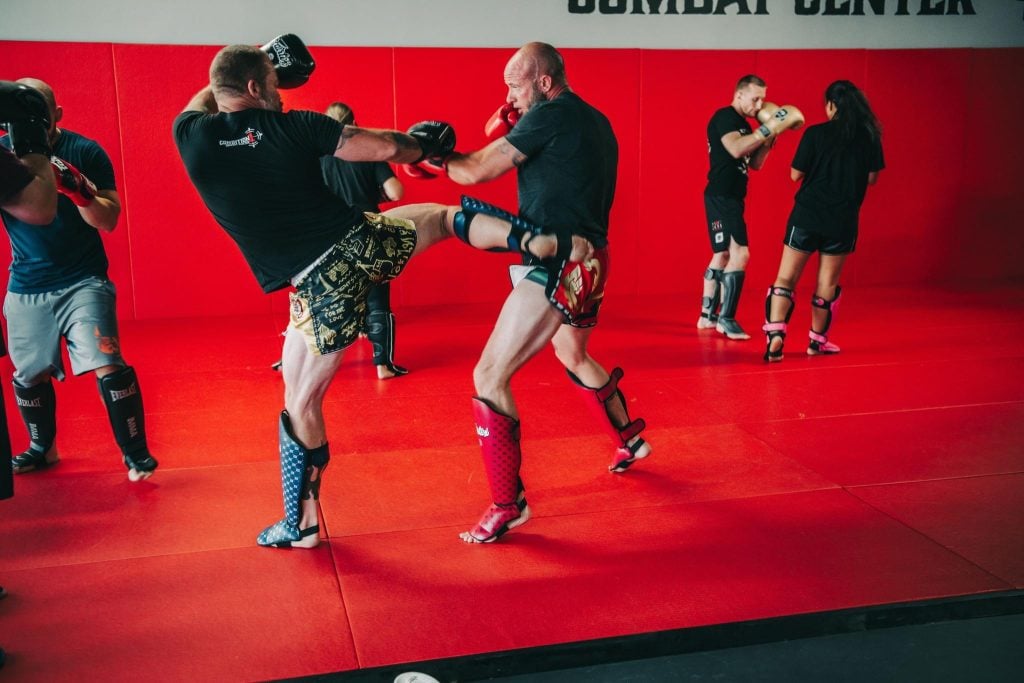
Muay Thai: Land 30 quality jab-low kick combinations on a heavy bag without losing guard or balance. Then, in pad rounds, execute that entry against light movement for three rounds of two minutes. The metric is not “power.” It is balance, guard recovery, and consistent distance.

Boxing: Keep your head on the centerline during the jab, step out 45 degrees on the hook, and show a clean exit without backpedaling upright. Score yourself with a simple checklist. If a coach at the boxing gym Condition 1 Combat Center calls out “chin up” fewer than three times in a round by week six, it is working.

BJJ: Hold closed guard posture for two minutes against a similar-sized partner without getting your posture broken. Execute a technical stand-up to guard recovery from bottom once per minute for three minutes. By week eight, add a basic guard pass against beginner resistance. At the Condition 1 Combat Center BJJ gym, we check whether you can describe the grips and head position out loud while doing it. If you can teach it, you own it.
MMA: Combine a cage wall-stand with a down-block reaction on the feet. Ten reps each in a controlled flow: sprawl to underhook to angle-out, then wall-walk to underhook to head position before exiting. The first milestone is doing this without confusion. The second is doing it at elevated heart rate without technical collapse.
Self defense: Grip breaks to exit with verbal commands. Measure the time from first touch to separation. If week one is a messy four seconds, week six should be a clean two seconds with a stable base and loud voice. In the self defense classes at Condition 1 Combat Center, we add a phone call or simulated report prompt during cool-down to build the habit of action after escape.
The numbers that matter for conditioning
People often ask how fit they need to be before they start. The secret is you get fit by training, not before it. Still, tracking a few key markers helps.
Breathing: Can you nasal breathe during warm-ups and most technical drilling. If not, slow down. Nasal breathing improves carbon dioxide tolerance and tends to keep you from redlining during early rounds. If you switch to mouth breathing during high output, fine, but return to nasal during recoveries within 30 seconds.
Heart rate: You do not need a chest strap, but if you wear one, use it. Aim for most technical drilling at 120 to 150 beats per minute, then spike during pad rounds or live rounds. The trap is hanging out in the 160s the entire class, which fries learning.
Time on feet: Boxing and Muay Thai reward stance endurance. Track how long you can shadowbox with quality mechanics. If your shoulders ride up by minute two, you need more time under tension and lighter hands.
Grappling density: Count your clean reps per minute in a drill, like shrimping or arm-drags. If you can only manage three clean reps in a minute at first, aim for five by week four. Quality first, then density.
Weight goals, body composition, and the lure of quick cuts
Nothing derails training like a reckless weight cut. At condition1combat.com you will find plenty of class options, not crash diets. Fat loss at a sustainable rate is usually 0.5 to 1 percent of body weight per week for recreational athletes. Fighters with upcoming bouts have different constraints, which they plan with coaches well in advance.
If your goal involves weight, pair it with a performance marker. For example, “lose six pounds over eight weeks while maintaining three rounds of pad work at a consistent pace.” If performance falls apart as the scale drops, adjust the plan. A win on the scale that costs you timing and resilience is not a win.
How to test progress without taking unnecessary damage
You do not need hard sparring every week to test growth. In striking, use structured drills: target sparring where only jabs and footwork score, or designated initiator rounds where one athlete pressures and the other escapes. In grappling, positional sparring reveals more than full scrambles. Start in side control bottom and work to frames and hip escape. Measure your survival time or the number of successful escapes.
Good gyms, including the mma training side at Condition 1 Combat Center, control contact. Ask a coach to set rounds that match your goal. If you are working on exits after combinations, you should not be trapped in a slugfest. If you are focused on guard retention, you should not spend rounds hand-fighting from the knees with no progression.
Use a training journal like a pro, in two minutes
The best performers track what matters and ignore what does not. After class, jot down three items: what you drilled, one cue that helped, one mistake you made. If you sparred or rolled, write the position or exchange where you felt lost. Next class, warm up with that position for two minutes. This habit compounds. Six months of two-minute notes is more valuable than any gear upgrade.
On the mma training pages at condition1combat.com, you will see themes across programs. Themes make it easier to journal. If the week is built around jab exits or half guard recovery, your notes stay focused.
Common traps that look like motivation
- Chasing too many skills at once and never repeating drills
- Comparing your round 3 to someone else’s round 30
- Setting goals around other people’s timelines or belts
- Jumping into hard sparring to “prove” something
- Starving yourself to fix a conditioning problem that training would solve
If you notice any of these, pause. Talk to a coach. Adjust. Realistic goals save joints and deliver skill.
Communicate with your coaches like a teammate
Your coach cannot guess your constraints. If you have a knee that flares after shooting doubles, say so. If night shift wrecks your sleep two days a week, bring it up. At the mma gym Condition 1 Combat Center, we can shape your plan: more stance and hand fighting on bad sleep days, more drilling on stable days. The bjj gym side can swap to butterfly guard entries if kneeling bothers you. The Muay Thai gym can bias teeps and knees if your hands are sore from desk work. The boxing gym can go heavier on defense drills when your shoulders are smoked from pull-ups.
The best athletes flag a goal before class, then ask for a single cue during drills. “Coach, I am working on my jab exit to the left. Can you watch my feet in round two.” That request takes five seconds and makes the next five weeks more productive.
How often to recalibrate
Expect to reassess every four to eight weeks. That window is long enough to see change, short enough to prevent drift. If you train three days a week, you will accumulate roughly 12 to 24 sessions per block. That is a reasonable number for a measurable bump in one or two focused areas.
In BJJ, reassessment might mean testing your guard retention against a partner a belt higher than you. In Muay Thai, it might be filming two pad rounds to check balance and guard. In MMA, you might run a short circuit of wall work and sprawls to see whether your transitions hold at higher output.
If life clips your training time for a month, do not restart from zero. Keep the same goals, shrink the dose. Two sessions per week for four weeks will maintain rhythm until you can expand again.
Balancing ambition and longevity
Ambition is good. Most of us sign up because we want to be capable, not careful. The trick is to aim high in a way that keeps you in the room next month. I have watched athletes in their fifties outlast twenty-somethings because they pick sustainable targets, recover well, and communicate. A realistic goal for a 52-year-old might be three classes per week and a technical spar once every two weeks, with a focus on clean exits and safe clinch breaks. After a year, that athlete moves well, breathes well, and has fewer dings than the hard-charger who tried to do everything in two months.
Longevity also depends on prehab. Add 5 to 10 minutes after class for shoulders, hips, and ankles. Scapular retractions, controlled hip rotations, calf raises, and deep squat holds will pay down injury risk. It is not glamorous. It is effective.
When to consider competing
Competition is a tool, not a requirement. If it interests you, build toward it deliberately. A reasonable green light for an amateur smoker or interclub in boxing or Muay Thai: you can spar light for 3 rounds while staying composed, you can hold stance under pressure, and you exit clean most of the time. For a grappling tournament, you should understand points, feel calm in bad positions, and have one A-game takedown or guard pull plan. For amateur MMA, you need months of integrated training, controlled sparring under a coach’s eye, and a lifestyle that supports camp demands.
Talk to your coach at mma training Condition 1 Combat Center well before signing anything. We will check your skills under stress, then set a camp. If the answer is not yet, that is coaching, not rejection. The long road is the winning road.
Nutrition and recovery that match your goals
You do not need a perfect diet to train well. You need enough protein, enough carbs around training, and hydration. A simple target is 0.6 to 0.8 grams of protein per pound of body weight for most recreational athletes, with carbs centered around sessions. If you train at 6 pm, eat a balanced meal at 3 or 4 pm and a small carb source 30 to 60 minutes before class. After class, add protein and a salty fluid. If late meals disrupt sleep, shift more calories earlier in the day.
Sleep drives adaptation. Seven to eight hours is a real goal, not a suggestion. If you cannot hit that, reduce intensity. Two hard days on five hours sleep sets you up for a sloppy round that risks injury.
A short case study: six weeks that worked
A new member, mid-30s, desk job, prior weightlifting background, no combat sports. He joined the mma gym Condition 1 Combat Center to learn striking and get leaner. Baseline: good strength, poor footwork, gassed by minute three. Goals set for six weeks: attend three classes per week, master jab-low kick with exit, complete three 2-minute pad rounds without losing stance, and trim 3 to 5 pounds without cutting calories aggressively.
Week two, his front foot was wandering. We cued a chalk line on the floor. Week three, he was still mouth-breathing early. We added nasal breathing during warm-up and between rounds. Week four, balance improved. We filmed pad rounds and noticed his right hand dropped on exit. That became the single cue for the week. Week six, he hit three clean rounds, weight down four pounds, no aches. We set the next block: add a check hook off the jab and start light technical sparring with jab-only constraints. This is what realistic looks like: steady, specific, owned.
How Condition 1 supports the process
Part of the reason people search for mma training condition1combat.com or Brazilian jiu jitsu training condition1combat.com is the promise of structure. Good coaching removes guesswork. At Condition 1 Combat Center, the class plans cycle skills across the month so you can revisit techniques under slightly different conditions. The Muay Thai gym program threads balance and timing before power. The boxing gym sessions drill stance, jab quality, and defense before combinations. The BJJ gym curriculum builds escapes and guard retention before hunting submissions. Self defense classes weave in decision-making and environmental awareness, not just techniques in a vacuum.
Your job is to bring one or two goals into that structure, then let the room shape you. When the structure and your goals align, you start stacking small wins. After a year, those wins add up to a different athlete.
Red flags that your plan needs a reset
- Nagging pain that grows each week, especially in knees, shoulders, or low back
- Constant fatigue or brain fog that lasts more than three days
- Dreading class because you feel lost every round
- Skipping warm-ups and cool-downs to cram more sparring
- Talking about belts, records, or opponents more than about skills
One red flag is enough to pause and adjust. Most issues clear in two weeks with smarter pacing, better sleep, and a tighter focus.
Bringing it all together
Realistic goals are not small. They are precise. Pick a horizon that fits your life, tie it to skills you can measure, and ask your coaches at the mma gym Condition 1 Combat Center to pressure test your plan. Whether you are drilling armbar defenses at the Condition 1 Combat Center BJJ gym, polishing jab exits in the boxing gym, building balanced kicks in the Muay Thai gym program, or running scenarios in self defense classes, the same habits apply. Track what you do. Recover well. Reassess on a schedule, not on a whim.
If you ever feel lost, strip it back: one skill, one cue, one block of four to eight weeks. Then get on the mats and let the work sort the rest.